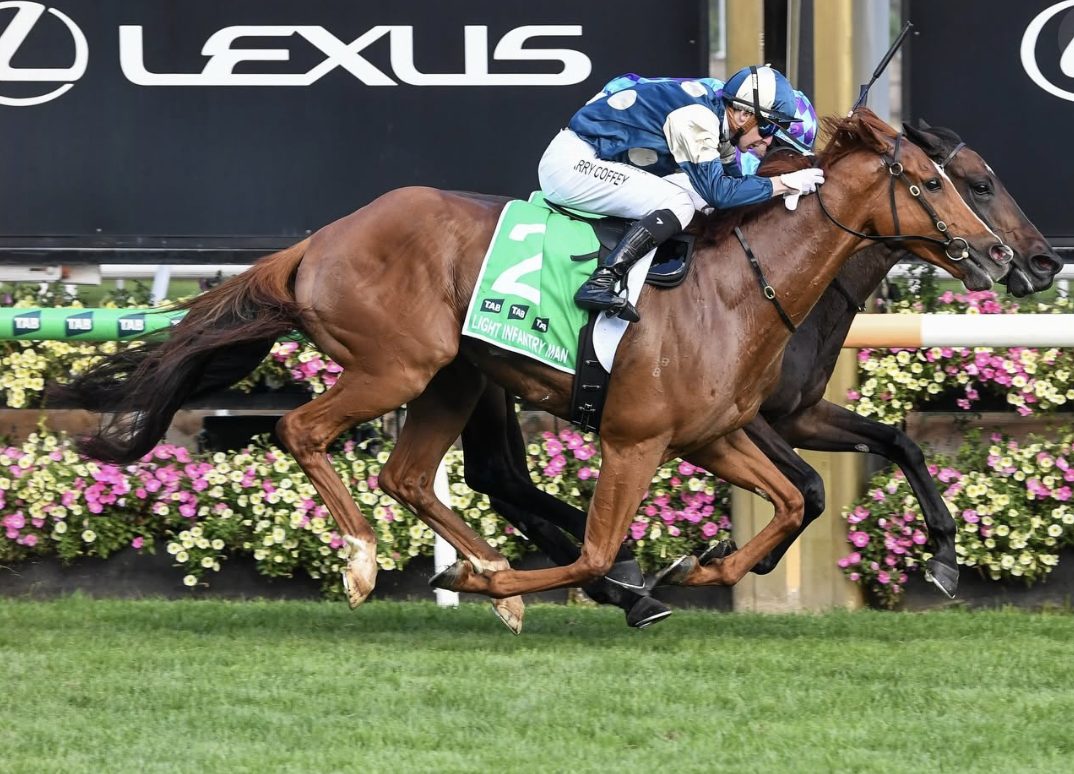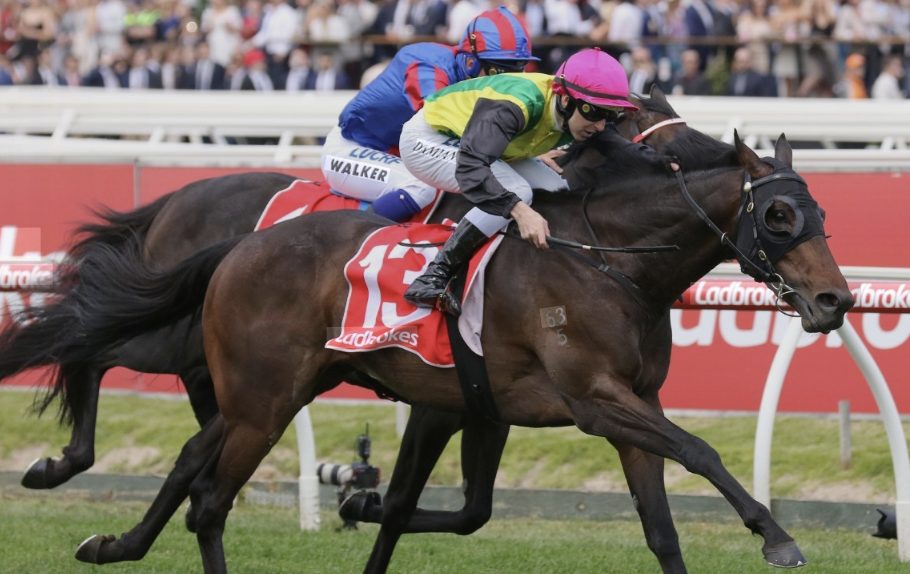
Spicy Martini is a genuine Group 1 sprinter, a Queensland Horse of the Year, and an $8,000 purchase who has now earned more than three hundred times what she cost. What she is not, as at 21 September, is a runner in The Everest.
She has no slot. With the race four weeks away on Saturday 17 October, that is no longer a formality waiting to happen — it is the whole story.
The audition
The traditional path into The Everest is The Shorts, the Group 2 over 1100 metres at Randwick, and that is where her connections took her on 19 September. It did not go to plan. The race was won by Mazu, an eight-year-old for Joe Pride and Rachel King, by a neck from Joliestar with King’s Secret a nose away third.
Spicy Martini ran on without winning. Jockey Taylor Marshall afterwards: “She ran phenomenally. Found ourselves off the bridle when the sprint came on. Just had us under pressure over the 1100m. 1200m probably a different story to travel more comfortably for longer. She did well to sustain her sprint.”
That is a real argument, and it may not be enough
Marshall’s point is legitimate. The Everest is run over 1200 metres, not 1100, and a mare who was under pressure at the shorter trip and still sustained her sprint is a different proposition at the extra hundred.
The problem is that slot-holders are not buying an argument. They are buying a horse they can put $700,000 behind and defend publicly, and the field of sprinters making that case this spring is deep.
Where the twelve slots actually stand
Only two are publicly settled. The Hong Kong Jockey Club has Ka Ying Rising, the defending champion, under its agreement with the Australian Turf Club — he left Hong Kong on 22 September for two weeks of quarantine and is scheduled to trial at Randwick on 6 October. Fairway Thoroughbreds confirmed Ninja on 5 September.
The remaining ten belong to Newgate and GPI, TAB, the Whitby/Madden/McCain and Werret group, James Harron, Coolmore, Mulberry Racing, Inglis, Chris Waller Racing, Godolphin and Yulong. Nominations close 12 October. There is time — slots routinely fill in the last fortnight — but there is not much of it.